
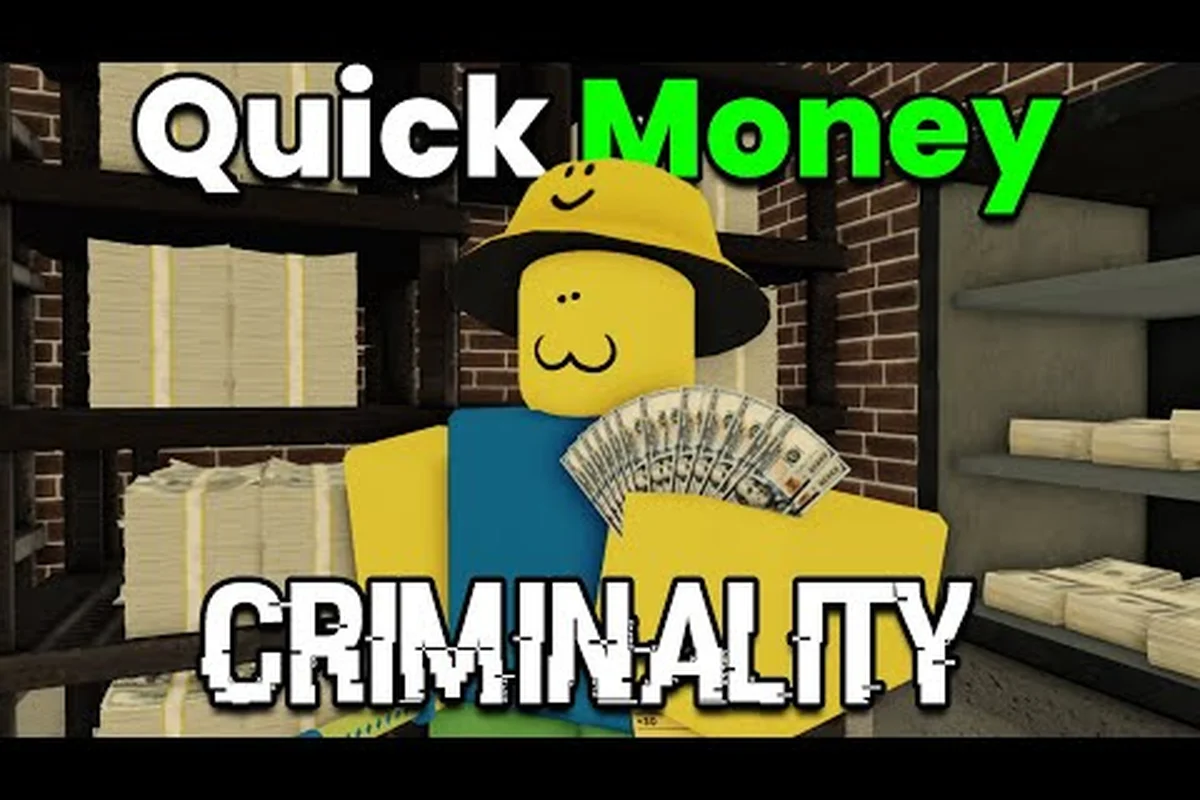
Criminality how to save money matters because every early purchase can either strengthen your next run or drain cash you need for ammunition and a dependable primary weapon. A deliberate buying order helps you reach the right items without turning every payday into a shopping spree.
A Practical Criminality Economy Plan
The in-game economy revolves around cash earned during activities and prices attached to weapons, ammunition, and other items. Because official Criminality materials have not published a full price index, exact values for many goods are unknown. The best approach is therefore not to chase every temporary discount, but to protect enough cash for a functional loadout and then spend only on upgrades that improve your next session.
The published Weaponry prices provide a useful anchor. The Hallows Launcher Mk II costs $200, the Hallows Launcher Mk III costs $300, the Snowball Launcher Mk II costs $190, the Snowball Launcher Mk III costs $300, and the Snowball Launcher Mk IV costs $260. These are in-game cash prices, not Robux prices.
| Spending tier | What to fund | Why it comes first |
|---|---|---|
| Core spending | One primary weapon and needed ammunition | Creates a repeatable, functional setup |
| Upgrade spending | A stronger version of that same role | Improves an existing path instead of adding clutter |
| Optional spending | Novelty or situational items | Purchases only after the core loadout is covered |
| Reserve | Cash held for the next earning run | Prevents an empty balance after shopping |
A three-part cash buffer is the central idea behind Criminality how to save money: keep the funds needed for ammunition, retain the balance required for your next planned upgrade, and treat everything else as optional. This prevents a large balance from disappearing across unrelated purchases.
Before optimizing purchases, it helps to understand the basic flow in the Criminality first-day guide. That foundation keeps your shopping decisions tied to activities you can actually complete, such as earning cash through NPC robberies and then returning to Weaponry purchases. For example, a $200 Hallows Launcher Mk II is an immediate core-spending target, while saving toward the $300 Hallows Launcher Mk III makes more sense once the cheaper setup reliably funds ammunition. This approach prevents cash from being spent on optional items before a primary weapon, ammunition, or the reserve needed for the next earning run.
Choosing the First Purchases in Criminality
When deciding what to buy first, identify the role you intend to use most often, then purchase only what supports that role. The most important question is not whether an item is powerful, but whether it improves the weapon and ammunition setup you already know how to use.
Prioritize a Usable Weapon and Ammunition
A primary weapon should come before multiple advanced items. If you cannot reliably afford ammunition for the weapon you own, switching to a different role may waste both cash and learning time. The best first purchase is therefore the cheapest setup that supports repeated play, not the most expensive product visible in the store.
| Purchase order | Recommended action | Budget effect |
|---|---|---|
| 1 | Secure ammunition for your current primary weapon | Protects future earning capacity |
| 2 | Buy one higher-tier primary weapon | Creates a clear upgrade path |
| 3 | Add ammunition for the upgraded weapon | Keeps the new setup usable |
| 4 | Consider a secondary or situational item | Only after the main loadout is stable |
This order is especially useful for the Snowball Launcher family. Because the Mk II costs $190 and the Mk IV costs $260, a player who can already operate the Mk II can plan a modest upgrade without immediately committing to the $300 Mk III. The saving comes from buying the $190 foundation and only moving upward when the next tier is genuinely needed.
Compare Published Launcher Prices
| Weapon | Published cash price | Smart buying interpretation |
|---|---|---|
| Snowball Launcher Mk II | $190 | Practical first entry into that weapon line |
| Hallows Launcher Mk II | $200 | Comparable foundational purchase |
| Snowball Launcher Mk IV | $260 | Premium version of the Mk II path |
| Hallows Launcher Mk III | $300 | Major jump that can strain a limited reserve |
| Snowball Launcher Mk III | $300 | Highest published Snowball price in this group |
When comparing the Hallows Launcher Mk II with the Snowball Launcher Mk II, the ten-dollar difference is small in absolute terms, but the correct choice still depends on which line you can use consistently. Paying an extra $10 for an unfamiliar role provides little value, while paying $10 less for a familiar setup leaves more cash in reserve.
Every Weaponry item also keeps a price tag after a pass unlock. That does not make the item free to buy after unlocking, and it prevents players from treating an unlocked product as a free upgrade. Budget the remaining purchase separately if you want the item.
Understanding the Criminality Economy
The Criminality economy explained in practical terms is a cycle of earning, reserving, and spending. A player repeatedly earns cash, uses part of it to maintain ammunition and equipment, and saves the remainder for a deliberate next purchase. The cycle works best when each earning run has a spending target already chosen.
Separate Maintenance Spending From Upgrade Spending
Maintenance spending covers ammunition and the equipment needed to continue earning, while upgrade spending improves a weapon or fills another role. Keeping them separate prevents a strong cash balance from disappearing after a purchase; for example, the $260 Snowball Mk IV leaves $40 more than the $190 Snowball Mk II for the next ammunition cycle, whereas the $300 Snowball Mk III consumes that margin. Before buying any upgrade, reserve enough for your current loadout and one full ammunition cycle.
| Cash balance | Recommended allocation | Avoid |
|---|---|---|
| Below one full loadout | Reserve it for ammunition and essential gear | Cosmetic or novelty purchases |
| Enough for one upgrade | Fund the upgrade plus the next ammunition cycle | Buying the upgrade with no operating margin |
| Enough for several upgrades | Choose one, then rebuild the reserve | Buying every listed weapon at once |
| More than needed | Keep the excess as a future target | Spending merely because the balance is high |
The listed launcher costs also reveal a useful cash-flow ladder. Moving from the $190 Snowball Mk II to the $260 Snowball Mk IV costs $70, whereas moving from the $190 Mk II to the $300 Mk III costs $110. Choosing the $260 version can preserve an additional $40 for ammunition, but only if the earlier weapon remains useful and you can operate the upgraded model.
Set a Purchase Goal Before Shopping
Write down the exact item and remaining cash before opening a store screen. This is a simple control against impulse buying, which can be especially costly when a store contains multiple weapon lines, limited-time products, and pass-linked items. A useful goal follows this format: record the target item, its published price, the cash reserved for ammunition and the next earning cycle, and the condition that would justify upgrading. For example, if the Snowball Launcher Mk IV costs $260 but the current $190 Mk II still meets your needs, keep using it until the reserve is secure; this prevents a temporary cash gain from becoming a permanent reduction in funds available for progression.
| Field | Example |
|---|---|
| Target item | Snowball Launcher Mk IV |
| Published price | $260 |
| Required post-purchase reserve | Amount set for ammunition and the next earning cycle |
| Upgrade condition | Reach the target only after the current loadout stops meeting needs |
| Alternative | Keep using the $190 Mk II if the reserve is not secure |
The Criminality account progression guide can help with unlock order, while this purchasing plan controls what happens to the cash earned during that progression. Those are separate decisions: unlocking a capability does not automatically justify buying every product tied to it.
A Reliable Money-Making Method for Saving
The strongest Criminality money making method is one that produces repeatable cash without requiring expensive purchases. A player should learn which activity they can perform consistently, budget for the ammunition it consumes, and treat the proceeds as future equipment rather than immediate spending money.
Measure the Real Net Result
Gross income is not the same as usable income. If an activity earns enough cash to buy a $300 weapon but also consumes a substantial amount of ammunition, the actual amount available for saving is lower. Track the balance before and after the full earning-and-maintenance cycle.
| Tracking step | Record | Why it matters |
|---|---|---|
| Start of session | Available cash | Establishes the real starting point |
| After earnings | Gross cash received | Shows income separately from costs |
| After ammunition | Remaining balance | Reveals the true net gain |
| End of planned purchases | Cash retained | Confirms whether the session stayed on budget |
| After a planned upgrade | Final reserve | Prevents future spending from becoming negative |
Because official sources do not publish universal earnings-per-session figures, use your own recorded results rather than accepting a claimed rate. Community reports can help identify patterns, but only your own history can establish a dependable Criminality money making method for your current account and available activities.
Keep Solo and Cooperative Spending Separate
Criminality solo money requires a different planning habit from group play because you cannot assume a teammate will cover a purchase or share a reward at the same moment. A solo cash reserve should therefore be enough to maintain your own ammunition and keep one usable weapon available.
When playing with others, coordinate before making a group purchase. One player may earn faster during a particular activity while another has already saved for an upgrade. A shared shopping plan prevents both players from spending the same anticipated balance. The Criminality cash guide can help you compare earning approaches before you commit more money to a loadout.
The basic solo rule is straightforward: never spend the reserve required for your next ammunition cycle. If the current balance cannot cover both the intended item and the next operating cycle, postpone the item rather than creating a cash shortage.
Solo Budgets, Group Decisions, and Real-World Purchases
Saving becomes harder when players confuse in-game cash with Robux purchases. These are separate spending systems. Buying Robux for the official game page or a pass can change available purchases, but it does not automatically provide the in-game cash needed for a $190, $260, or $300 launcher.
Keep the Two Budgets Separate
| Spending type | What it affects | Budgeting method |
|---|---|---|
| In-game cash | Weaponry items, ammunition, and other cash-priced goods | Use the balance inside the game |
| Robux | Roblox and optional game purchases | Track separately from in-game cash |
| Group purchases | Shared decisions among players | Agree on who contributes and when |
| Solo purchases | Your own equipment path | Reserve enough for ammunition first |
If you are evaluating optional Robux purchases, the Criminality gamepass list guide provides a separate framework for judging their stated features. Do not use a pass as a substitute for a disciplined in-game savings plan, because the pass may unlock a product while its listed cash price still remains afterward.
Make Group Purchases Transparent
Before buying a launcher for the group, compare the published cash prices against each player's available balance. A $190 Snowball Mk II can leave a larger margin for ammunition than a $300 Hallows Mk III. If one player expects to contribute later, wait rather than relying on an expected balance.
| Group decision | Better choice when | Result |
|---|---|---|
| Buy the lower-tier launcher | Several players need ammunition soon | Everyone keeps a larger operating margin |
| Buy the higher-tier launcher | One player has a clear role and full reserve | The upgrade benefits the intended user |
| Delay the purchase | Members have competing targets | No one loses money to an overlapping plan |
| Split by role | Players use different weapons | Cash is distributed by actual need |
Solo players can apply the same cash-goal logic within each cycle, reserving enough for essential ammunition and equipment before committing to a Snowball Mk II or Hallows Mk III upgrade. Cooperative players should also confirm cash ownership for every item, since a pass-linked product may unlock for multiple participants; for example, the purchaser can retain a $190 launcher while another player contributes toward its ammunition, preventing one member’s balance from being spent twice.
The Best Items to Buy in a Careful Order
The Criminality best items to buy are not determined by a universal ranking. Published prices allow limited comparisons, but weapon usefulness, ammunition cost, and familiarity determine the best choice for a particular account. A sensible order is ammunition, one functional primary weapon, its next meaningful upgrade, and only then additional roles or novelty products.
A Three-Stage Purchase Plan
| Stage | Purchase target | Cash rule |
|---|---|---|
| Stage 1: Stay operational | Ammunition and one dependable primary | Do not spend the operating reserve |
| Stage 2: Improve the main role | A stronger version of the chosen weapon | Buy only when the reserve remains intact |
| Stage 3: Expand utility | A secondary role or situational item | Purchase last, with leftover cash only |
A concrete example begins with the $190 Snowball Launcher Mk II, followed by ammunition for that weapon and enough left for another earning cycle. After using it and identifying a genuine need for improvement, the player can target the $260 Snowball Launcher Mk IV. The $70 difference is easier to manage than an initial $110 jump to the $300 Mk III.
This also answers the question of what to buy first in a new account: establish the item that supports the activity you already perform, rather than choosing the highest-priced launcher. If your current weapon already fills that role, save for ammunition before upgrading.
When a Premium Weapon Makes Sense
Premium purchases make more sense when the cheaper setup has become a real constraint and the upgraded item preserves the same familiar role. They make less sense when they merely look stronger in a store menu, especially when the price removes the margin needed for ammunition.
A $300 launcher should follow clear conditions: treat the purchase as a planned step in the Criminality money-making loop, not an automatic upgrade. A practical example is the $200 Hallows Mk II, which remains a foundational weapon while the $300 launcher is considered only after the lower tier stops covering enough jobs. The $300 price also needs to be weighed against the cost of matching ammunition, so a larger cash balance after buying the launcher is not enough if another earning cycle cannot be funded.
-
The lower tier is no longer meeting the account’s needs.
-
The player understands how to use the higher tier.
-
Ammunition for the upgraded weapon is affordable.
-
The remaining balance can support another earning cycle.
-
The purchase does not cancel a more valuable ammunition or equipment target.
For the $260 Snowball Mk IV, the same logic applies at a lower commitment. The $190 Snowball Mk II can serve as a controlled entry point, while the $260 version becomes the next planned upgrade. The $200 Hallows Mk II is another foundational option, but it should be judged by role compatibility rather than by a claimed performance advantage that official sources have not published.
Turning Good Intentions Into a Lasting Savings System
A budget only works when you can apply it under pressure. New products, visible price tags, and group plans can all make spending feel urgent, even when the underlying item is optional. The best system separates a fixed reserve from a discretionary balance.
Use a Simple Ledger
| Balance portion | Definition | Allowed use |
|---|---|---|
| Operating reserve | Ammunition needed for planned play | Required maintenance |
| Upgrade fund | Money set aside for one named item | That item only |
| Group fund | Cash reserved for a coordinated purchase | Agreed group item |
| Discretionary cash | Everything left after the reserves | Optional purchases |
Review the ledger before every shopping session. If the upgrade fund is not yet full, continue saving even if a related weapon is available. The Hallows and Snowball price tags are fixed reference points; they are not deadlines that require immediate purchase.
Resist Category Mixing
A second weapon line is not automatically an improvement because Criminality’s economy depends on keeping one dependable role fully supplied. For example, if your main weapon already clears a profitable activity but a new gun costs money and requires separate ammunition, the extra firepower may never produce a return before your cash reserve drops. The same logic applies to novelty gear: an item can look appealing in the store without improving your best money-making loop. Spending there also delays the next earning cycle, so preserving enough cash for ammunition, tool usage, and repeat runs is often more valuable than upgrading immediately.
Before buying outside your planned category, ask three questions based on the active money-making loop: the purchase should improve the role you already use, cover its ongoing ammunition or tool costs, and preserve enough cash for the next earning cycle. For example, if your primary weapon reliably clears a solo money run, a costly second weapon that requires a separate ammo supply is not worth buying unless the added firepower shortens runs enough to earn that cost back. This check prevents one-off store spending from interrupting Criminality’s cash-reserve cycle and keeps your next run funded.
-
Does this item improve the role I already use?
-
Can I afford its ammunition after the purchase?
-
Will the remaining balance support the next earning cycle?
If any answer is no, leave the cash where it is. This rule is central to Criminality how to save money because it turns saving into a repeatable process rather than a reaction to each new store display. For example, if a weapon upgrade requires ammunition you cannot replenish before the next earning cycle, its higher damage is irrelevant; keeping that money available for a solo run protects your cash reserve and prevents a planned purchase from forcing you into lower-profit activities just to recover.
Review Purchases After Each Milestone
After a major purchase, check the remaining balance before starting the next activity. If the reserve is too low, the purchase was too large even if the weapon looked desirable. This review is more useful than judging the item by price alone, because the account’s real budget is determined by what remains.
| Situation | Correct response |
|---|---|
| Item bought and reserve intact | Continue the planned earning cycle |
| Item bought and reserve reduced | Reprice future upgrades before earning again |
| Purchase delayed to preserve ammunition | Keep the delay; it protects efficiency |
| Several items wanted at once | Choose one and rename the upgrade goal |
Consistent application of this system makes the Criminality economy explained in practical terms: cash gains value when it survives long enough to fund the next meaningful upgrade. The goal is not never spending. The goal is spending on a clear sequence without losing the funds required to continue.
Frequently Asked Questions
What should a new Criminality player purchase first?
A new player should secure ammunition for a dependable primary weapon before buying an upgrade. If choosing a published launcher tier, the $190 Snowball Mk II or $200 Hallows Mk II can serve as a controlled first purchase. Keep enough cash for continued play, because a more expensive weapon is not efficient without the ammunition needed to use it.
Is the $300 Hallows Launcher Mk III worth buying immediately?
Not immediately for a player who is still protecting a limited reserve. The $300 price sits above the $190 Snowball Mk II, $200 Hallows Mk II, and $260 Snowball Mk IV. Buy it when the account needs that upgrade, the player can maintain its ammunition, and enough cash remains for another earning cycle.
What is the most reliable way to save cash in Criminality?
Use a three-part budget consisting of an operating reserve, an upgrade fund, and discretionary money. Record your balance before and after earning, including ammunition purchases, so you can see the net result. Add a new weapon only after confirming that it supports your usual role and that the post-purchase reserve remains adequate.
Does buying a gamepass remove an item’s in-game cash price?
No. Every Weaponry item retains a price tag after its pass unlock, so unlocking access and purchasing the item are separate steps. Treat Robux spending and in-game cash spending as separate budgets. A pass may improve access, but it does not remove the need to preserve cash for ammunition and planned cash-priced purchases.
Should solo players buy the same weapons as groups?
Not necessarily. Solo players need a larger operating margin because they cannot assume a teammate will contribute cash or cover ammunition. Groups can divide purchases by role and timing, but each player should still protect enough cash for continued activity. For solo play, one well-supported primary setup is generally more economical than several partially funded weapon lines.