
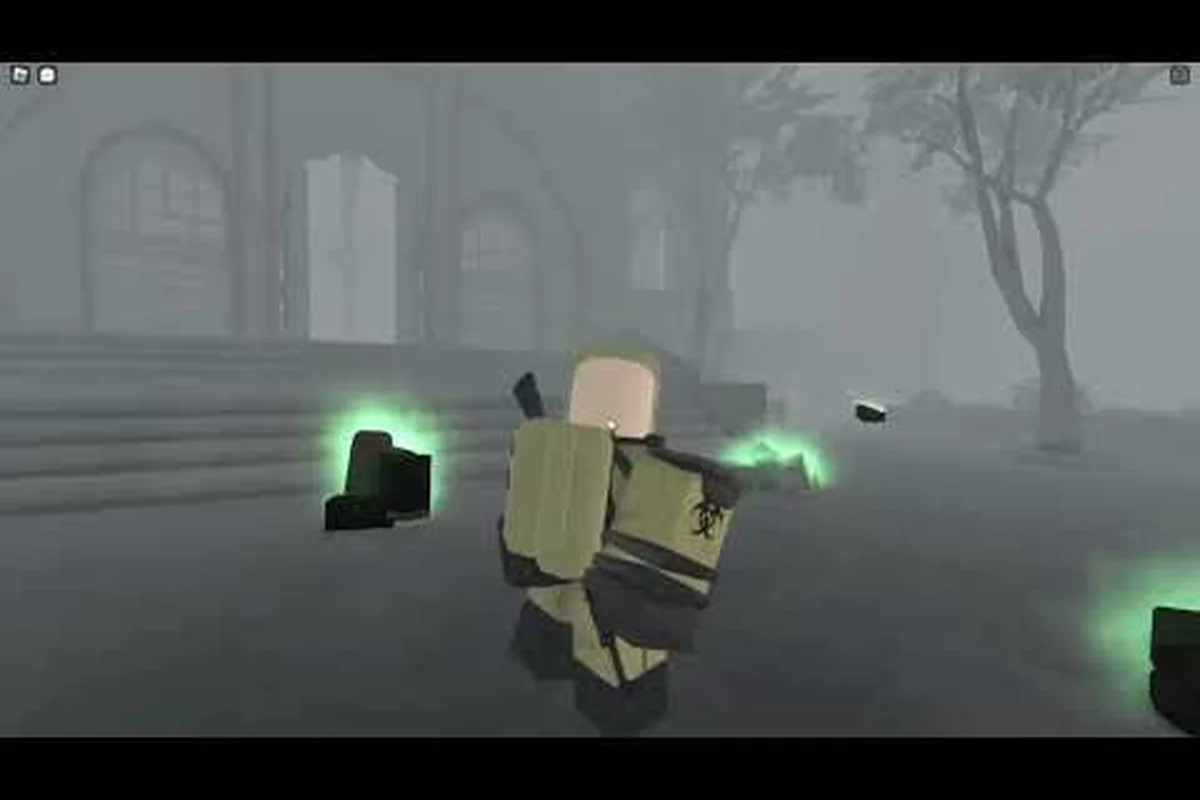
Criminality infection tips matter because every mistake can turn a human survivor into an infected zombie. When an infection event begins, the safest response is to create distance, secure a clear escape lane, and avoid firing at close range where a missed shot can expose you. Movement, weapon choice, and positioning should work together: use cover to break enemy sightlines, keep infected opponents away from teammates, and choose safer routes instead of pushing through a crowded corridor. Surviving the first threat preserves your team’s ability to continue the match and gives you more time to understand whether the server is using a standard, casual, competitive, or private-server infection setup.
Understanding Criminality Infection Basics
Infection is a asymmetric mode in Criminality where humans try to remain alive while infected players create a growing danger. The central rule is simple: the infected side becomes stronger as it captures or eliminates humans, while the human side loses its numbers and defensive options. The official Criminality – INFECTION Unleashed trailer confirms that humans must survive the infected, and its November 28, 2024 release marked the mode’s return after roughly two years away.
That context changes how you should approach the first minutes. Running directly toward gunfire may produce a kill, but it can also leave the remaining team exposed. Surviving infection instead requires a balance between active defense, safe repositioning, and team awareness. A player can win an isolated exchange and still weaken the human side by disappearing from the group or failing to return.
The core priorities are straightforward: prioritize team spacing, route control, and defensive timing over chasing isolated kills. If Criminality’s infected players already hold a chokepoint, use a flanking path instead of forcing a direct fight; when an encounter is unavoidable, use your weapon and ammunition to create a short defensive window, then regroup with the surviving humans. This approach protects the team’s escape options and prevents one infected player from cutting off multiple survivors.
-
Avoid unnecessary encounters when infected players already control a nearby route.
-
Preserve useful weapons and ammunition for defensive moments.
-
Keep teammates informed about movement and sightings without relying on exact numbers.
-
Create distance from crowded areas where a single infected player can trap multiple survivors.
-
Return to the group after a successful maneuver so your presence still supports the team.
| Priority | Why it helps | Practical result |
|---|---|---|
| Stay with survivors | Preserves team support and escape options | Fewer isolated human players |
| Change routes | Disrupts infected players’ pursuit patterns | Less predictable movement |
| Defend when necessary | Prevents infected players from freely advancing | More time for the human side to regroup |
| Preserve resources | Keeps options open for later encounters | Better late-round positioning |
The mode’s exact damage values, movement speed changes, health totals, and round lengths have not been published by the game, so avoid planning around unverified numbers. Focus instead on behavior that remains useful regardless of the current patch: spacing, route choice, communication, and decisive movement.
How the Human-to-Infected Shift Works
The best defense begins before contact. If the infected can see you moving alone toward an isolated area, you have already given them an easy route. Instead, move with nearby survivors, pause near corners, and leave before a group of infected players can converge on your position. This is especially important in a criminality infection zombie scenario, where the immediate threat may be less dangerous than the pressure it creates around weaker teammates.
Community reports describe infection as increasingly tense because every conversion changes the balance. That direction is confirmed by the mode’s design, although the game has not published a complete conversion formula. A smart survivor therefore treats every encounter as both a combat problem and a numbers problem. Eliminating the threat is helpful, but preventing one teammate from becoming an additional infected player can be even more valuable.
What Makes Survival Difficult
Infection punishes predictable routines. Repeating the same path, always taking the same doorway, or lingering near a dead end gives infected players time to organize. A survivor should make movement unpredictable without becoming random, because random running can separate the team and waste stamina or resources.
Watch for signs of pressure rather than exact enemy counts. The presence of a teammate suddenly going quiet, a path becoming contested, or nearby survivors beginning to scatter can signal that infected players are advancing. Players should communicate what they can confirm: “route ahead,” “move back,” or “need help.” Vague warnings are less useful than short location-based updates.
Criminality Infection Tips for Human Survivors
The strongest Criminality infection tips combine careful movement with the willingness to take a favorable fight. You should not treat every infected player as a target to chase, because the infected side benefits when humans react emotionally and scatter. Instead, establish a defensive rhythm: move with the group, watch approaches, and attack when an infected player enters your usable space.
Early Round: Build a Defensive Group
The beginning of an infection round is best spent identifying teammates and selecting routes that offer more than one exit. A group of survivors can watch different directions, react to one threat, and prevent the mode from scattering after the first serious engagement. By contrast, an isolated player may win a duel but still disappear from the team’s shared defensive structure.
Use the group’s survival value as your decision rule. A nearby teammate who needs assistance may make an otherwise poor fight worthwhile, while a distant teammate can benefit more from you preserving a weapon for later. This does not require assigning a strict team leader; it simply means considering how your action affects the remaining humans.
| Situation | Better choice | Why |
|---|---|---|
| One infected player approaches | Fight only if escape is covered | Avoid a prolonged isolated duel |
| Infected players cut off the route | Rotate with nearby survivors | Spread the group before it is trapped |
| A teammate is isolated | Create a distraction or clear path | Support may prevent another conversion |
| No nearby teammates | Preserve distance and resources | Survival now matters more than an early kill |
| The group is being pursued | Choose a route with another exit | Deny the infected side a clean chase |
Route flexibility is the most transferable skill. Before a group commits to a corridor, doorway, or open area, identify where it can go next. You do not need a detailed map to do this. Look for side paths, elevations, entrances, and spaces that can break a straight pursuit line. Those features are more useful than memorizing a route that every infected player can learn after watching you use it twice.
Mid Round: Fight With Purpose
A productive engagement ends when the human side gains space, resources, or time. If the infected player is far away, heavily shielded by other enemies, or leading survivors into a poor area, disengaging can be the stronger choice. The point is not to maximize the number of eliminations; it is to keep more humans alive while the infected side remains under pressure.
Use short engagements whenever possible. Commit only after identifying where you can move afterward. Fighting beside a doorway with one usable exit may be safer than dragging a pursuit into an open lane where infected teammates can surround you. A fight should never consume the entire group’s attention unless stopping it is essential.
Weapon handling follows the same principle. Select the weapon that lets you resolve the immediate threat, then return to the group. Do not switch weapons solely because another option looks more powerful if that decision breaks your position or wastes a chance to assist a teammate. Criminality has not released comparative damage or fire-rate charts, so weapon choice should be based on familiarity, handling, and the current matchup rather than invented tier statistics.
Late Round: Survive the Collapse
When the infected side has the advantage, survival becomes less about individual skill and more about avoiding capture. The shrinking human group should move as a unit, communicate continuously, and avoid splitting for questionable loot or isolated eliminations. A small group that stays together still has several defenders, whereas scattered survivors become easier targets.
Preserve the final escape route even when an infected player seems weak. Chasing a retreating enemy into a dead end can allow additional infected players to close the route. If the group is cornered, use separation to create uncertainty, but preserve one clear path for the weakest or most vulnerable survivor. The exact tools for identifying a teammate’s vulnerability vary, so watch practical signs such as hesitation, missing movement, or requests for support.
The official infection trailer establishes the mode’s comeback and central human-versus-infected premise, but it does not provide a complete official strategy guide. That makes careful observation more useful than unsupported claims. Players who can quickly identify safe exits, changing threats, and shifting group positions will usually make better decisions than those trying to predict exact hidden statistics.
Countering Zombies Without Overextending
Criminality infection zombie encounters are most manageable when you dictate the terms of the fight. Infected players are trying to make contact and spread the threat, so your goal is to prevent a clean approach. A player who can be reached easily becomes a potential conversion, while a player who moves between cover and open space forces the infected side to spend more effort.
Control Distance, Not Just Health
Distance is valuable because it gives you time to react. Moving laterally or changing elevation can interrupt a direct approach, but these actions should not pull you away from nearby survivors. The important distinction is between controlled displacement and panic. Controlled movement keeps your team’s escape route intact; panic sends each player in a different direction.
Use three levels of engagement—disengage, control, and eliminate—based on the infected player’s route, the team’s numbers, and the available space. For example, if an infected player is approaching a narrow corridor while your squad is spread across a safer lane, disengage and move together; if they are blocking a doorway, control them briefly so teammates can regroup; eliminate only when clearing that choke point or supporting a nearby teammate will restore safe movement. This prevents the common infection mistake of chasing a kill while leaving the rest of the team exposed.
-
Disengage: The infected player has no visible route to your group, or continuing would expose the whole team.
-
Control: You keep the threat occupied or limit its approach without chasing.
-
Eliminate: You commit enough force to remove the immediate threat and restore safe movement.
| Engagement level | Best use | Risk to avoid |
|---|---|---|
| Disengage | Protecting the group during a numbers disadvantage | Wasting an easy elimination |
| Control | Buying time for regrouping | Getting drawn into a bad location |
| Eliminate | Clearing a route or supporting a teammate | Chasing beyond the team’s support range |
The support range should be judged by the match, not by a hard distance. An open lane can make a teammate appear closer while actually being easier to hit. Conversely, a teammate around a corner may be safe even if the direct route is longer. This is why offensive skill cannot replace positioning.
Use Team Information to Avoid Traps
Communication is especially important when a human is operating alone. A brief warning can prevent several survivors from entering the same infected player’s area. Rather than simply saying “enemy,” identify the useful fact: which direction is blocked, which teammate needs help, or whether the group should stop and wait for the threat to pass.
| Information to share | What teammates can do with it |
|---|---|
| Approaching direction | Prepare to move, control, or evade |
| Blocked route | Select a different escape path |
| Teammate under pressure | Redirect support before a conversion |
| Clear path | Reposition the group while a window is open |
| Lost visibility | Slow down and avoid walking into a trap |
Do not flood the team with constant updates. Short, actionable messages preserve attention during fast moments. If infected players are close enough that a long message would distract you, call the direction and request the most important response. Concise information is more useful than a complete report that arrives after the situation has changed.
Avoid Predictable Respawn Routes
Survivors often have safe places to return after defeat, but the game has not published a formal list of respawn locations or their exact rules. Regardless of the implementation, repeatedly returning through the same visible entrance creates a repeatable pattern. Watch for an infected player lingering nearby before re-entering the fight.
This advice matters even if a spawn system grants temporary protection, because that protection may end as soon as the player leaves a safe area. Treat the first seconds after returning as a fresh positioning decision. Move with a teammate if possible, or wait for a safe opening if you are alone. The survivor badge and mode details can be found in the game’s broader mode overview, including the Criminality game modes guide.
Choosing Casual, Standard, and Competitive Servers
The right server changes how cautiously you should play, but it does not change Infection’s core objective. A casual server may reward cooperation and relaxed pacing, while a competitive server can feature more capable players who punish repetitive routes and weak positioning. The labels should guide your expectations, not replace sound fundamentals.
Criminality Standard vs Casual
The difference between standard and casual is best understood as a change in pressure, not as permission to ignore the objective. In a casual match, you can still use the same core rules: stay near teammates, preserve escape routes, and avoid chasing. However, a more relaxed environment may be less punishing when you learn how infected players approach or when the human group temporarily splits.
| Factor | Standard-style expectations | Casual-style expectations |
|---|---|---|
| Team coordination | More deliberate and consistent | Flexible but still useful |
| Opponent awareness | Assume skilled pursuit and adaptation | Expect varied skill levels |
| Route selection | Change routes frequently | Adapt when a route becomes contested |
| Fight selection | Protect the group’s position | Choose favorable fights more freely |
| Learning focus | Read patterns and pressure | Practice fundamentals and cooperation |
These are practical expectations, not published matchmaking specifications. Criminality has not released a formal system defining exactly which server rules differ between standard and casual, so treat any community description as experience-based rather than guaranteed configuration. The official trailer and the game page confirm the mode itself, while the server labels are better evaluated through your own match history.
Criminality Casual vs Competitive
Competitive servers deserve a sharper survival plan because opponents are more likely to learn recurring behaviors. Change your route after using it once, vary your pace, and avoid revealing a destination before it is necessary. The most important advantage is still positional unpredictability: a survivor who does not telegraph a path gives the infected side fewer easy plans.
Competitive matches also make communication more valuable because coordination often determines whether a fight ends with a human advantage or a new zombie. Do not take unnecessary engagements merely to prove you can win, though. A fight that damages your position may be less valuable than a clean rotation that keeps the human group intact.
| Casual approach | Competitive improvement |
|---|---|
| Follow a familiar route | Use multiple exits and change patterns |
| Fight whenever a target appears | Fight when it supports the group or clears a route |
| Rush after eliminations | Rotate back toward surviving teammates |
| Ignore callouts | Use brief, location-based warnings |
| Stand in one clear area | Avoid becoming a stationary target |
If you want more context on mode distinctions, the limited-time mode overview explains how limited-time events relate to Criminality’s broader mode structure. Use that distinction to judge how much routine you can safely keep: a casual match can still punish a familiar route, but competitive and limited-time settings are more likely to expose repeated movement patterns, making multiple exits, irregular pacing, and cautious rotations especially valuable when surviving infection.
Criminality Competitive Tips and Private Server Preparation
Competitive Infection demands consistency, but it does not demand reckless aggression. The best players reduce the number of mistakes that create conversions. That means arriving with a plan, knowing when the team should move, and accepting that a successful fight may end with disengagement rather than a long pursuit.
Pre-Round Checklist
Preparation improves your first decisions because you enter the match with a clear order of operations. Check the server rules, identify the human teammates you can initially see, and decide on a grouping point. You should also know whether the private server has any custom restrictions before choosing weapons or tactics.
- Confirm the server type and current rule set.
- Locate nearby human teammates.
- Choose a starting route with another exit.
- Keep one weapon ready before moving into open areas.
- Agree on short location-based callouts.
- Identify where the group can regroup.
Pre-round discipline matters because Infection converts individual mistakes into team-wide consequences. Ten seconds spent checking the rules or finding teammates can prevent an avoidable engagement during the opening movement. In competitive play, that preparation is not a delay; it is part of controlling the first dangerous interaction.
Working in a Criminality Private Server
A Criminality private server can provide a controlled environment for practicing the mode with friends or testing a different rule arrangement. Its usefulness depends on the host’s settings and on everyone respecting the same objectives. Private sessions are not automatically safer if teammates split up or use private-server freedom to disregard communication.
| Preparation step | Practical benefit |
|---|---|
| Review host rules | Prevents accidental rule violations |
| Choose a clear team structure | Makes support requests easier to understand |
| Establish callout conventions | Reduces confusion during close fights |
| Test the round flow | Helps players learn how the mode ends |
| Keep settings consistent | Makes repeated practice meaningful |
The Criminality VIP server guide provides additional context on private-server commands and configuration options. Do not assume that a listed command changes Infection’s underlying rules; verify the host’s current setup and follow the game interface and official instructions.
Holding a Human Group Together in a Tight Round
When a competitive round tightens, prioritize in this order: maintain the human group’s cohesion, keep a usable escape route, remove only infected players who pose an immediate or strategic danger, preserve equipment for the next contact, and then take a stronger position. This sequence prevents you from chasing isolated infected players while the survivors are split, exposed, or forced into a bad fight; for example, disengaging when your weapon cannot support another exchange protects the group’s next opportunity without wasting scarce ammunition.
-
Keep the human group connected.
-
Protect a usable escape route.
-
Remove only immediate or strategically dangerous infected players.
-
Preserve equipment for the next unavoidable contact.
-
Secure a stronger position once the immediate threat is gone.
This order resists the urge to chase every elimination. A single infected player can be harmless as a target if they are away from the humans, while one approaching a group can be urgent. The game’s official material does not publish exact threat values, so the useful distinction is positional: where the infected player is, who they can reach, and what route they threaten.
A short retreat rule can make the priorities easier to apply. If a fight leaves you without a clear return path, the group separated, or your weapon no longer supports another exchange, disengage. Rejoining the survivors is usually more valuable than extending a duel in an isolated part of the map.
Advanced Infection Tactics for Consistent Survival
Consistency comes from reducing randomness, not from performing the same sequence every round. Advanced players separate information, movement, and combat into distinct decisions. They first establish what is known, then choose where the group can survive, and only then decide whether the threat should be removed.
Read Pressure Instead of Guessing Counts
You do not need an exact enemy count to recognize danger. A teammate’s sudden movement, repeated visual checks in one direction, or a group beginning to back away can indicate pressure. Treat these signs as a prompt to create distance, especially if there is no obvious friendly group nearby.
Confidence beats false precision. Saying that an infected player is approaching a nearby side route is more useful than making an unsupported numerical claim. Accurate communication helps the team act, while a wrong count can make everyone commit to the wrong response.
| Observation | Likely team response |
|---|---|
| Movement slows near one approach | Prepare an alternate route |
| Teammates retreat together | Rotate before separation occurs |
| A side entrance remains quiet | Consider using it as an exit |
| No visual confirmation for several seconds | Do not assume the threat disappeared |
| One teammate is out of contact | Assume the situation is unresolved |
Preserve Two Options
A good human position has at least two usable choices: continue forward, turn back, take cover, or assist a teammate. When only one option remains, the position becomes easy for infected players to predict. This is particularly important near doorways, corners, and open crossings, where a single blocked path can turn a routine rotation into a trap.
Whenever you stop to fight, identify the fallback point before the engagement begins. The fallback does not need to be a specific named location. It can be a general direction, a teammate’s position, or a piece of cover that preserves movement. If the fallback is far away, reconsider whether the fight is worth starting.
Practice Specific Scenarios
Focused practice is more useful than repeatedly playing without a goal. You can practice one scenario per session, such as protecting a teammate during a route change or handling an approach while the group is split. Use the Criminality advanced tips guide for broader movement and teamwork fundamentals.
| Practice goal | What to observe |
|---|---|
| Group rotation | Whether teammates leave and rejoin cleanly |
| First contact | Whether the team fights or exits with purpose |
| Route changes | Whether the group creates genuine unpredictability |
| Resource preservation | Whether players spend tools only when necessary |
| Late-round defense | Whether the team avoids isolated pursuits |
After each session, remember one decision that worked and one that created risk. This produces a more useful practice loop than simply chasing eliminations. It also helps you distinguish a positioning problem from a weapon problem, which matters because Criminality has not published enough official weapon statistics to support a fictional ranking.
Frequently Asked Questions
What are the best Criminality infection tips for beginners?
The best Criminality infection tips are to stay near human teammates, keep an alternate escape route, and avoid chasing infected players away from the group. Fight when it protects survivors or clears a needed path, then return to the team. Practice route changes and concise callouts, because predictable movement is easier for infected players to exploit than unpredictable but coordinated movement.
Can players reliably survive Infection in Criminality?
Players can improve their odds of surviving infection, although no game mechanic guarantees survival. The mode becomes more dangerous as infected players gain numbers, so the human side should prioritize staying connected, avoiding isolated encounters, and preserving a clear retreat. A player who controls position and supports teammates generally creates more survival value than one who pursues a difficult elimination.
Should human players chase every infected enemy in Criminality?
No. Chasing every infected enemy can pull survivors away from their group, consume resources, and allow additional infected players to cut off the route. Eliminate a target when it is immediately dangerous or when clearing the route supports the team. Otherwise, rotate together or use distance to preserve the human side’s defensive position.
How do casual and competitive Infection matches differ in Criminality?
The practical difference is usually the consistency and pressure of opponents, although Criminality has not published a complete official rule comparison for every server category. Competitive matches reward more adaptive routes, clearer callouts, and selective fights. Casual matches can still reward the same fundamentals, but mistakes may be less consistently punished. Treat community comparisons as experience-based rather than guaranteed matchmaking rules.
Is a Criminality private server useful for practicing Infection?
A Criminality private server can be useful for practicing teamwork, testing callout conventions, and learning how a custom rule setup changes a match. Review the host’s rules before starting, agree on communication signals, and keep the group together during the opening rotation. The official game has not published a universal guarantee that private servers support every Infection option, so verify the current interface and host configuration.